TypeSafe AI opened Jev to everyone on Sunday 20 September, five days after the model launched behind a waitlist, and said demand rather than a product change ended the queue.
The company emerged from stealth on Tuesday 15 September with Jev and a US$40 million seed round led by DCVC.
Jev is a decision model. It answers a fixed set of questions and returns them as data that other software can act on, rather than writing an answer for a person to read. TypeSafe describes it as a component inside a larger application.
Would you let a software model make routine decisions without a person checking?
Choose an answer, then select Vote.
What a Decision Model Is
A caller sends Jev two things: a state, which can be a string of text, a JSON object or an array, and a set of typed questions defined before the call. There is nothing to parse, because the answer space was fixed in advance.
TypeSafe’s documentation lists three question types. Choice picks one option from up to 255 supplied. Score places the answer on a scale the user defines. Noul returns the probability, from 0 to 1, that a yes or no statement is true.
Choice and Score also return a confidence value. Software acts on a high one and hands a low one to a person or a larger model. Questions sharing one state are evaluated in parallel, so one answer does not leak into another.
A support ticket can come back Technical 64 per cent, Sales 23 per cent and Billing 13 per cent, instead of a paragraph saying the ticket looks like a technical issue.
Jev cannot write a sentence, hold a conversation or plan a long task. It answers the questions it was given and nothing else. TypeSafe calls it a System One model, after the fast, intuitive half of Kahneman’s thinking.
The name is short for Jevons. William Stanley Jevons observed that making something more efficient tends to increase how much of it gets used rather than reduce it. TypeSafe’s bet is that decisions cheap enough to stop counting get made far more often.
Why Agents Want It
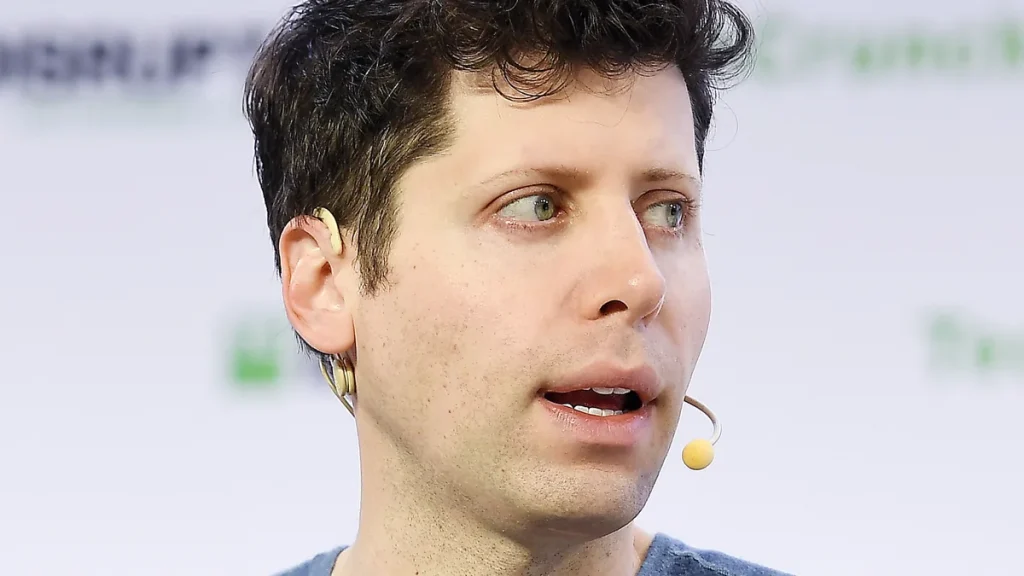
Diogo Almeida, the founder and chief executive of TypeSafe AI, is a former OpenAI researcher who worked on the instruction-following methods behind ChatGPT. “We have lightning in a bottle, and yet it is not useful,” he told TechCrunch. He said the industry is “optimizing for human language”, which “is not useful for automation because computers speak a different language”. He expects “smart software all over the place”.
TypeSafe lists where a decision model sits inside an agent: picking the next tool or subagent, deciding whether a workflow should continue, retry, ask the user or stop, scoring urgency or risk before an action, verifying a model’s output, and routing uncertain cases to a person. These are the small judgements a language model currently makes slowly and expensively.
The company says Jev is trained with a method it calls RLCD, reinforcement learning for calibrated decisions, and generates its own training data rather than using human preferences.
What It Costs
TypeSafe publishes a price of US$0.042 per million input tokens. Output is free. It reports latency of 70 to 500 milliseconds end to end.
In its own workflow evaluations, TypeSafe reports that Jev runs up to 193.6 times faster and up to 444.6 times cheaper than large language models.
New users start with US$5 in credits, which TypeSafe equates to about 120 million tokens, and the model is free on Vercel’s AI Gateway until 25 September.
The Adoption Signal
Vercel added Jev to its AI Gateway on Wednesday 16 September and published adoption figures on Friday 18 September. Jev is “the fastest-adopted model in AI Gateway history”, Vercel said. In its first 24 hours it reached nearly 13 per cent of paid teams, twice the share of the GPT-5.6 family and more than six times Fable 5.1’s.
Developers can reach the model through Vercel’s AI Gateway, Cloudflare Workers AI and LiteLLM, among other routes. TypeSafe’s own API was the one the waitlist blocked, and the company said developer traffic had outrun its capacity.
In Australia
There is no verified Australian adoption data for Jev. An Australian developer can sign up today and start on the US$5 credit, and the change that matters locally is the unit price of a decision rather than a local deployment.
Automated systems already make routine decisions across much of the infrastructure Australians rely on, and when that layer fails it makes the news, as it did when more than 40 callers could not reach triple zero during an Optus outage.
The Bet on Cheap Decisions
TypeSafe has priced a decision at a point where it stops being a budget line. The name says what the company expects to happen next.
Jev cannot write, converse or plan, so it does not replace the models that can. Where it is not confident, the call goes back to a person or a larger model.
Two things are not yet known: what the open version costs to run at volume, and who is using it in production. The waitlist answered the demand question in five days.
Sources: TypeSafe AI documentation, “Jev”, docs.typesafe.ai; TypeSafe AI, “Decisions, not strings”, typesafe.ai; Vercel, “Jev is the fastest-adopted model in AI Gateway history”, 18 September 2026, https://vercel.com/blog/ai-gateway-jev-model-launch; Techstrong.ai, “TypeSafe Opens Jev for General Availability”, 21 September 2026, https://techstrong.ai/features/typesafe-opens-jev-for-general-availability/; Crypto Briefing, “TypeSafe opens Jev AI to public after rapid adoption forces waitlist removal”, 21 September 2026, https://cryptobriefing.com/typesafe-jev-ai-public-access/; TechCrunch, “A new kind of AI model from a ChatGPT inventor is thrilling developers”, 18 September 2026, https://techcrunch.com/2026/09/18/a-new-kind-of-ai-model-from-a-chatgpt-inventor-is-thrilling-developers/
Photo: CSIRO, CC BY 3.0, via Wikimedia Commons.
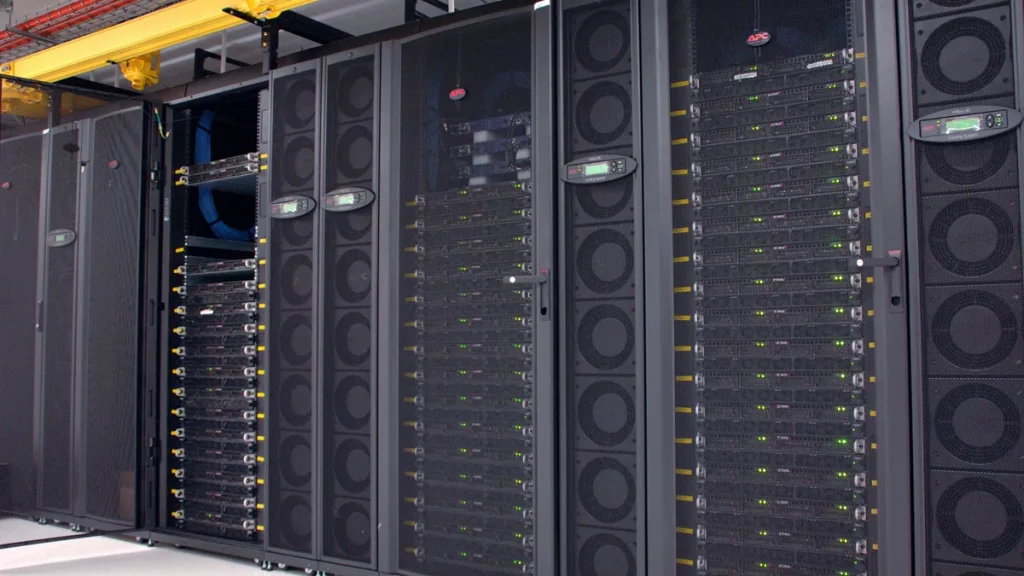
Illustrative: a GPU cluster in a CSIRO data centre, photographed in 2010. The article reports TypeSafe AI opening its Jev decision model to all developers on 20 September 2026. Not the company, its staff or its equipment.