
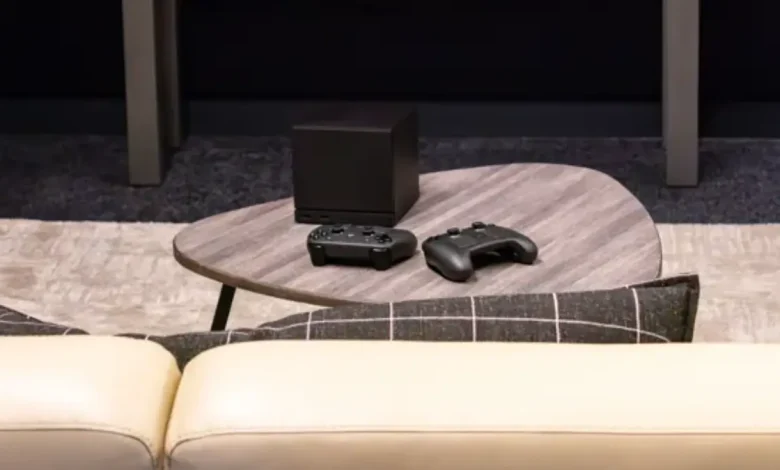
Valve is bringing back the Steam Machine, nearly a decade after its first attempt to merge console convenience with PC power. The earlier models, developed in partnership with manufacturers like Alienware and Lenovo, stumbled due to SteamOS’s limited game compatibility. But thanks to the massive success of the Steam Deck, the idea is being reborn — this time, fully in Valve’s hands.
A Fresh Start with Big Ambitions
Unlike the 2010s experiment, Valve’s new Steam Machine isn’t a collaboration with third-party builders. It’s a fully in-house console-sized PC, engineered to run modern games at 4K with AMD’s RDNA 3 GPU, comparable to an RTX 4060 or RX 7600 mobile graphics chip. While not a powerhouse by enthusiast standards, it promises strong performance at a (hopefully) competitive price point — though Valve has yet to announce exact figures.
Early impressions from hands-on previews suggest it could be the most practical way to bring a full PC gaming experience to the lounge room.
SteamOS Evolves: From Weak Link to Strength
The first Steam Machines struggled because SteamOS lacked support for most Windows games. That’s no longer true. Valve’s Proton compatibility layer now lets nearly all Windows titles run on Linux-based SteamOS, with performance that often rivals or even surpasses Windows PCs — a breakthrough proven by the Steam Deck’s success.
A few exceptions remain, notably multiplayer games with strict anti-cheat systems like Battlefield 6 and Destiny 2. Still, most of Steam’s massive catalogue runs smoothly.
Valve is also introducing a new verification system for its devices — Steam Deck, Steam Machine, and the upcoming Steam Frame VR headset — making it easier for players to know which games run best on each platform.
Compact Design, Big Personality
Physically, the Steam Machine is tiny — roughly a 6- to 7-inch cube, smaller than an Xbox Series X and about the size of a GameCube. The design is sleek and understated, featuring a slim RGB light bar and a magnetic, swappable front panel. Valve plans to release 3D printing files so users can create their own custom covers, and accessory makers will likely jump on board.
Despite its size, the Steam Machine packs plenty of ports:
- Front: Two USB-A ports and a MicroSD slot
- Back: DisplayPort, HDMI, two USB-A ports, USB-C, and internal power (no bulky brick)
Inside, it’s cleverly engineered for cooling, using a large heatsink and rear exhaust fan to manage the GPU’s 110–130W TDP. Storage options include 512GB or 2TB NVMe SSDs, both user-replaceable — and, unlike the Steam Deck, the slot supports full-size 2280 drives. Other components, however, are soldered and non-upgradeable to maintain the small form factor.
Performance and Early Impressions
The new Steam Machine pairs a 6-core Zen 4 CPU with its custom AMD GPU. In testing, it ran Cyberpunk 2077 at 4K Ultra (with FSR upscaling) smoothly and handled ray tracing without major drops. Silent Hill F proved more demanding, but adjusting to 1440p Medium with FSR delivered solid gameplay — reminding us this is still a PC that benefits from tuning settings.
Valve says the system aims to play all current games at 4K with FSR, though some Unreal Engine 5 titles may require compromises. Over time, developers may optimize games to auto-detect Steam Machine specs — much like they do with the Steam Deck today.
Who It’s For
The Steam Machine targets players who enjoyed the Steam Deck but want a more powerful, plug-and-play experience for the living room. Valve says about 20% of Deck users already connect it to a TV, proving the demand for a console-style PC.
It’s not meant for hardcore PC builders, but rather console gamers curious about PC gaming. With performance up to six times stronger than the Steam Deck, it’s built to handle demanding titles like Baldur’s Gate 3 without stutter — even in 4K.
Pricing and Outlook
Valve hasn’t confirmed pricing yet, only hinting that it’ll be “competitive with similar gaming PCs.” Given the modest specs, it’s likely to sit below the $1,000 mark — a crucial price point if Valve wants to compete with the Xbox Series X and PlayStation 5.
In a market where gaming hardware prices keep climbing, an affordable, compact 4K-capable PC could carve out a unique niche. If Valve can balance cost, compatibility, and convenience, the new Steam Machine may finally achieve what the first couldn’t — bringing PC gaming to the couch in style.
Also Read This: Menulog to Cease Operations in Australia After 20 Years