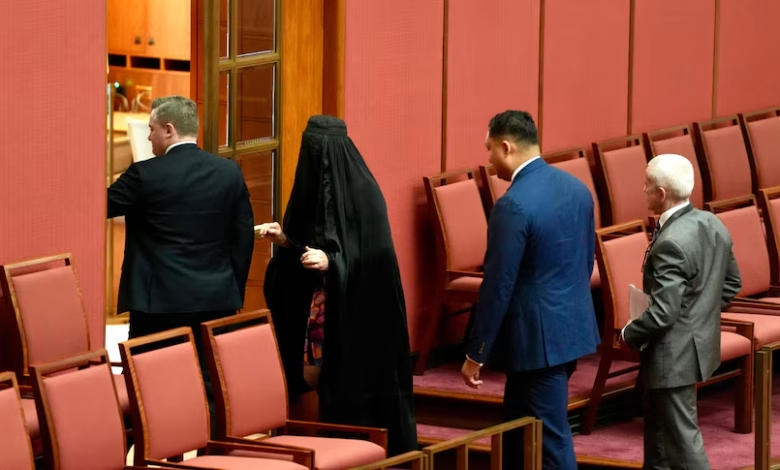
On 24 November 2025, Senator Pauline Hanson, leader of the One Nation party, reignited major political and social controversy when she entered the Australian Senate chamber wearing a black burqa. The stunt forced the Senate to suspend proceedings for approximately one and a half hours, drawing stark condemnation from across the political spectrum and renewed debate about Islamophobia, national security, and women’s rights.
What Happened
The Senate was suspended on Monday afternoon for a prolonged period after Hanson refused to remove the burqa, despite being sanctioned. She was then barred from re-entering for the remainder of the day. The suspension resumed around 5:50 pm once the chamber regained order.
Why She Did It
Pauline Hanson says her act was a protest: she had been denied leave to introduce a private senator’s bill that would ban “burqas and other full-face coverings in public places.” She framed the burqa as a national security risk and a symbol of what she described as the “ill treatment of women.” In an emotional Facebook post, she criticised her Senate colleagues as “hypocrites” and insisted that if they do not want her wearing the garment, they should go ahead and ban it.
Reactions from Politicians and Community
The stunt drew fierce criticism from across Parliament and from community leaders.
Greens leader Larissa Waters called it an insult. Labor Senate leader Penny Wong said Hanson’s behaviour was “not worthy” of Parliament and accused her of being disrespectful to the chamber and to people of faith. Liberal Senate leader Anne Ruston argued it was not an appropriate way to address the chamber.
Independent Senator Lidia Thorpe demanded Hanson be ejected, while Fatima Payman, who is Muslim and wears a hijab, said the act disrespected a faith and a community of Australians and needed to be dealt with immediately. Mehreen Faruqi, a Greens senator and one of the few Muslim parliamentarians, labelled the stunt as racist and Islamophobic. Nationals Senator Matt Canavan said the act debased Parliament and ridiculed Muslim Australians.
Aftab Malik, Australia’s special envoy against Islamophobia, warned that linking the burqa to security risks could worsen harassment and violence against Muslim women.
Historical Context: Not Her First Burqa Stunt
This was not the first time Hanson wore a burqa into Parliament to make her point.
In 2017, she entered the Senate during Question Time in a full-length burqa, calling for the garment to be banned on national security grounds. That stunt triggered a rebuke from then-Attorney-General George Brandis, who said the behaviour mocked a faith community. Human rights organisations also condemned the earlier act, with Amnesty International Australia calling it a revolting act of intolerance and an attack on Muslim women.
About Pauline Hanson: Profile & Political Career
| Attribute | Details |
| Full name | Pauline Lee Hanson |
| Date of birth | 27 May 1954 |
| Party | Founder and leader of One Nation (also known as Pauline Hanson’s One Nation) |
| Political rise | Elected to Ipswich City Council in 1994; first entered federal Parliament in 1996 as an independent MP for Oxley; founded One Nation in 1997. |
| Ideology | Right-wing populist, national conservative, known for anti-immigration and anti-Islam rhetoric. |
Hanson’s political career has been marked by controversy, particularly relating to race, immigration, and cultural identity. In 2024, she was found by a federal court to have breached the Racial Discrimination Act after telling Greens Senator Mehreen Faruqi — who is Muslim — that she should “pack your bags and piss off back to Pakistan.”
Key Figures Quoted
Pauline Hanson insists the burqa is a national security risk and a sign of women’s oppression, defending her stunt as raising urgent issues. Penny Wong criticised Hanson’s conduct as disrespectful to the Senate and to people of faith. Matt Canavan said the stunt made Parliament look cheap and was demeaning to Muslim Australians. Fatima Payman condemned Hanson for disrespecting her faith and called for immediate action. Larissa Waters labelled the act an insult. Mehreen Faruqi called Hanson’s gesture racist and Islamophobic. Senate President Sue Lines confirmed that Hanson was suspended for the day for refusing to remove the covering. Aftab Malik warned the stunt would increase risks faced by Muslim women.
Broader Implications & Risks
1. Islamophobia and Social Impact
Many commentators argue the stunt fuels prejudice, particularly against Muslim women who wear face-veiling garments by choice or faith. Malik expressed concern that it might deepen harassment and violence against Muslim women.
2. National Security Framing
Hanson continues to frame the burqa as a risk to safety, yet when pressed for evidence of actual security threats, she declined to provide concrete data.
3. Parliamentary Decorum
The incident raises questions about decorum in the Senate. Critics say the stunt undermines the dignity of the institution.
4. Repeated Provocation
Since this is not her first burqa stunt, observers suggest Hanson is returning to a familiar tactic to draw attention rather than presenting new arguments.
Timeline of the Incident
- Motion Denied – Hanson is refused leave to introduce her private senator’s bill to ban full-face coverings.
- Burqa Entry – She returns to the Senate wearing a burqa during division.
- Refusal to Comply – She refuses to remove the burqa after being admonished.
- Suspension – The chamber formally suspends her for the day; she remains on the floor.
- Senate Halted – Due to her refusal and the chaos it causes, the Senate is suspended for about 90 minutes.
- Aftermath – The Senate resumes without her; Hanson’s supporters and One Nation colleagues remain in the gallery.
Historical Comparison: 2017 Stunt
In August 2017, Hanson wore a burqa during Question Time in the Senate. Then-Attorney-General George Brandis, in a passionate reprimand, called her actions “an appalling thing to do” and warned she risked offending religious communities. Amnesty International also condemned the act, calling it an attack on the rights and dignity of Muslim women.
Why This Matters
This incident shines a spotlight on ongoing tensions in Australian politics over multiculturalism, security, and the role of religion. It highlights the use of provocative theatrics in parliamentary politics, raising questions about whether such tactics advance meaningful policy debate. For Muslim Australians and other minority communities, the stunt is not merely symbolic: it intersects with real-world issues of safety, belonging, and discrimination.
The response — including bipartisan condemnation and calls for censure — underscores how seriously such behaviour is taken within the institution of government.
Pauline Hanson’s repeated burqa stunt has once again sharpened national debate. Underneath the political theatre lies a deep fault line: how Australia balances freedom of expression, religious freedom, and security concerns, while preserving the integrity of its parliamentary process.