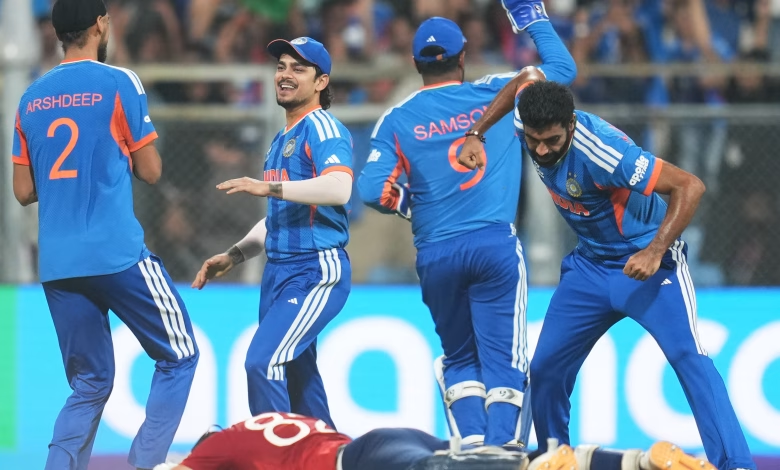
- India defeated England by 7 runs in a dramatic T20 World Cup semi-final at Wankhede Stadium, Mumbai
India survived a late England surge to secure a dramatic seven-run victory in a high-scoring ICC Men’s T20 World Cup semi-final at the Wankhede Stadium in Mumbai. In a match that produced an avalanche of runs and a number of tournament records, India posted 253 for 7 before restricting England to 246 for 7 in their 20 overs. The victory sends India into the final where they will face New Zealand, with the chance to claim their third T20 World Cup title.
The semi-final will be remembered as one of the most remarkable games in the history of the tournament. Both teams delivered an attacking display rarely seen at this level, producing the highest combined total ever recorded in a T20 World Cup match. According to the International Cricket Council, the match featured a total of 499 runs and 34 sixes, the most in any T20 World Cup fixture.
Match Summary
| Team | Runs | Wickets | Overs | Run Rate |
|---|---|---|---|---|
| India | 253 | 7 | 20 | 12.65 |
| England | 246 | 7 | 20 | 12.30 |
| Result | India won by 7 runs |
Sources
https://www.theguardian.com/sport/2026/mar/05/india-hold-off-brave-england-and-briliant-bethell-to-reach-t20-world-cup-final
https://www.icc-cricket.com
https://www.espncricinfo.com
India’s aggressive batting laid the foundation for the victory. Wicketkeeper-batter Sanju Samson led the charge with a blistering 89 from 42 balls. His innings included a series of powerful boundaries and kept the Indian run rate consistently above twelve per over.
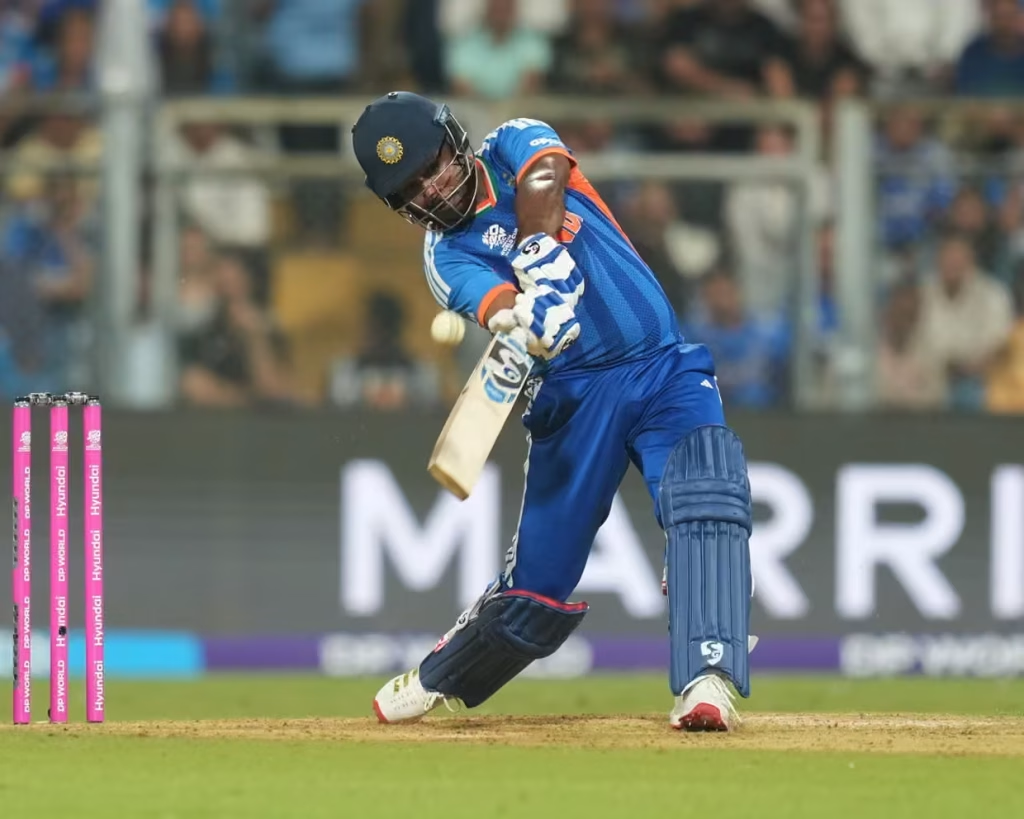
Samson was handed an early reprieve when England captain Harry Brook dropped a straightforward catch in the third over. At that stage Samson had scored only 15 runs. The missed opportunity proved costly as he went on to dominate England’s bowling attack, guiding India to an imposing total.
India’s innings began at a rapid pace. By the end of the powerplay they had already reached 67 for 1. The batting order maintained the momentum throughout the middle overs, ensuring that England’s bowlers were never able to regain control. Several Indian batters scored at strike rates exceeding 200, a reflection of the relentless approach taken by the hosts.
Key Indian Batting Performances
| Player | Runs | Balls | Strike Rate |
|---|---|---|---|
| Sanju Samson | 89 | 42 | 211.90 |
| Tilak Varma | 40 | 18 | 222.22 |
| Shivam Dube | 31 | 15 | 206.67 |
| Others combined | 93 | 45 | 206.66 |
England’s bowling attack endured a difficult evening. Jofra Archer and Sam Curran both conceded heavily, with Archer finishing among the most expensive bowling performances by an England player in a T20 World Cup match. England’s three seam bowlers delivered 11 overs combined and conceded 150 runs, illustrating the scale of India’s attacking intent.
Despite the daunting target of 254, England refused to retreat. Their response was anchored by Jacob Bethell, who produced one of the finest innings of the tournament. The young left-hander scored a superb 105 from 48 balls, striking cleanly and maintaining England’s hopes deep into the chase.
Bethell’s century was remarkable not only for its speed but also for the context in which it came. England were chasing a record total under immense pressure from a partisan crowd at the Wankhede Stadium. Yet Bethell remained composed, combining power hitting with clever placement to keep England in the contest.
England’s Chase Highlights
| Player | Runs | Balls | Strike Rate |
|---|---|---|---|
| Jacob Bethell | 105 | 48 | 218.75 |
| Jos Buttler | 25 | 17 | 147.06 |
| Jofra Archer | 22 | 6 | 366.67 |
| Others combined | 94 | 49 | 191.83 |
At several stages England appeared capable of pulling off an extraordinary chase. After the powerplay they were marginally ahead of India’s scoring pace. The teams were level after 10 overs and again after 12 and 13 overs, showing how closely matched the contest had become.
However, the turning point arrived in the 18th over when Jasprit Bumrah delivered a crucial spell of disciplined bowling. England managed to add only six runs in that over, allowing India to regain control at a decisive moment.
Bethell was eventually run out after reaching 105, ending England’s strongest chance of completing the chase. With the required run rate climbing rapidly, England’s lower order attempted a late assault.
Archer briefly threatened to overturn the result in dramatic fashion. The fast bowler struck three consecutive sixes off the final legal deliveries of the match, reducing the margin of defeat to just seven runs. Despite the late fireworks, England finished narrowly short of their target.
The match also highlighted the pressure faced by bowlers in modern T20 cricket. Both teams conceded more runs than they had ever allowed in a T20 international match before this encounter. The aggressive batting style and favourable batting conditions at Wankhede created a contest heavily tilted toward the batters.
Key Match Records
| Statistic | Record |
|---|---|
| Combined runs in match | 499 (highest in T20 World Cup history) |
| Total sixes in match | 34 (tournament record) |
| India sixes in innings | 19 |
| Highest successful semi-final total defended | 253 |
England can still take encouragement from their performance. Despite conceding such a large total, they stayed competitive until the final moments. Captain Harry Brook had earlier described his team as one that never considers itself out of a match, and their determined chase reinforced that reputation.
Fielding moments also played an important role in the outcome. Brook’s dropped catch of Samson early in India’s innings proved costly. In contrast, India produced a series of sharp fielding efforts, including a relay catch involving Axar Patel and Shivam Dube that removed Will Jacks during England’s chase.
Cricket analysts frequently emphasise the impact of fielding in close contests, and this match was another example of that principle. The difference between victory and defeat often lies in small margins, and India’s sharper fielding arguably contributed to their narrow win.
The result now sets up an intriguing final between India and New Zealand. India will aim to build on their strong batting form and capture another global title. For England, the semi-final defeat will be painful but the performance of players such as Bethell offers optimism for the future of the team.
Few T20 matches combine such dramatic swings of momentum, record-breaking statistics and individual brilliance. This semi-final delivered all of those elements and will likely be remembered as one of the most extraordinary encounters in the tournament’s history.