
- Online fuel price platforms have seen a major surge in usage as petrol prices rise amid global tensions
As fuel prices continue to rise amid global uncertainty, more motorists are turning to online platforms to find the cheapest petrol. The surge in demand for price-checking tools reflects growing concern among consumers, particularly as international tensions, including the Iran conflict, put pressure on global oil supply chains.
One of Australia’s most widely used platforms, Petrol Spy, has reported a dramatic increase in traffic. According to its owner, Andrey Firsov, page views have risen between six and eight times since the conflict began. This sharp rise highlights how heavily drivers are relying on digital tools to manage rising fuel costs.
Australia consumes around 55 billion litres of fuel annually, according to data from the Department of Climate Change, Energy, the Environment and Water. Even small fluctuations in fuel prices can significantly affect household budgets, especially as petrol prices have recently climbed above 220 to 230 cents per litre in several regions.
However, while these platforms provide convenience, questions remain about the accuracy and reliability of the information they display.
Petrol Spy operates using a combination of retailer data and user-submitted updates. The platform covers approximately 8,500 fuel stations nationwide, making it one of the most comprehensive fuel-tracking tools available. To improve data quality, only registered users can submit price updates. Despite these safeguards, inconsistencies can still occur.
Mr Firsov has acknowledged that discrepancies may arise due to delays in updates or external factors. In some cases, retailers may adjust displayed prices strategically to manage demand, particularly during periods of panic buying. Additionally, technical issues or sudden price changes can result in outdated information appearing on the platform.
Recent examples have illustrated these challenges. In Ballarat, two fuel stations were reported to have significantly higher prices listed online compared to surrounding outlets. While such cases attracted attention, they were described as isolated incidents. Out of 44 stations in the area, the majority were still pricing fuel within the expected range of 220 to 229 cents per litre.
Economists suggest that, despite occasional inaccuracies, these platforms remain broadly reliable. Professor David Byrne from the University of Melbourne noted that user-generated systems can sometimes produce irregular data, but overall trends tend to reflect real market conditions. The primary limitation is the time lag between updates, which can lead to outdated or inconsistent pricing.
This issue becomes more pronounced during periods of volatility. Fuel prices can change multiple times a day, particularly when global oil markets are unstable. According to the International Energy Agency, crude oil prices can fluctuate by more than 5 percent in a single trading session during geopolitical crises. These rapid changes can make it difficult for real-time data platforms to maintain complete accuracy.
In contrast, some regions in Australia have implemented stricter systems to ensure price transparency. New South Wales operates a government-backed platform known as FuelCheck, which requires fuel retailers to report their prices in real time. Failure to provide accurate data can result in financial penalties. This regulatory approach has made FuelCheck one of the most reliable sources for fuel pricing in the country.
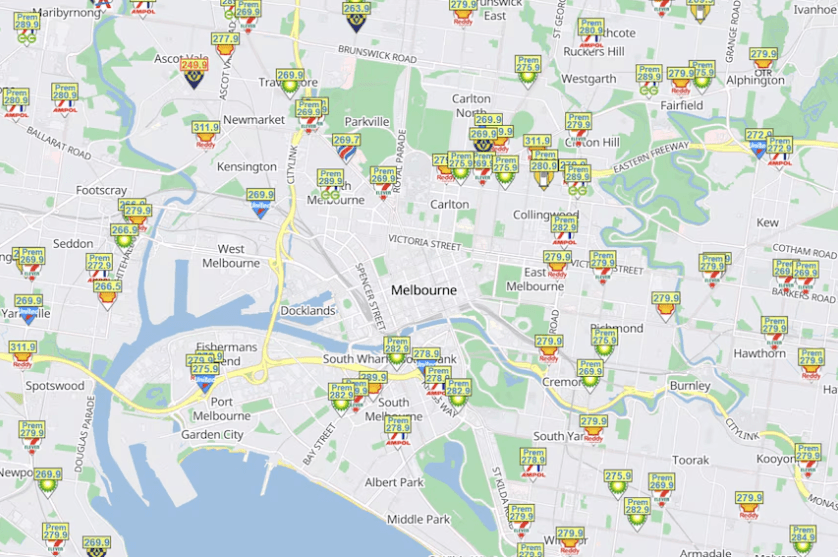
Victoria has taken a slightly different approach through its Service Victoria app, which includes a feature called Servo Saver. This tool aims to protect consumers by limiting how often fuel prices can be increased. Under the system, prices can only be adjusted once per day, reducing the risk of sudden spikes.
A key feature of Servo Saver is its forward pricing mechanism. Each day at 4pm, the next day’s fuel prices are published, allowing motorists to plan their purchases in advance. While this system improves predictability, some experts argue that it is less user-friendly compared to the New South Wales model.
The following table compares the main fuel price platforms currently available:
| Platform | Data Source | Coverage | Accuracy Level | Key Feature |
|---|---|---|---|---|
| Petrol Spy | User and retailer submissions | 8,500 stations nationwide | Generally reliable | Real-time crowd-sourced updates |
| FuelCheck (NSW) | Mandatory retailer reporting | New South Wales | Highly accurate | Legal requirement for price updates |
| Servo Saver (VIC) | Government-regulated pricing | Victoria | Reliable | Daily price cap and advance display |
The growing reliance on these tools also reflects broader consumer behaviour during times of uncertainty. Reports of fuel shortages at some service stations, combined with rising prices, have led to instances of panic buying. This behaviour can further strain supply chains and contribute to temporary price distortions.
Globally, fuel markets remain sensitive to geopolitical developments. The ongoing Iran conflict has raised concerns about disruptions to oil exports, particularly through key shipping routes such as the Strait of Hormuz. Approximately 20 percent of the world’s oil supply passes through this corridor, making it a critical factor in global energy stability.
In Australia, the impact of such disruptions is often felt quickly due to the country’s reliance on imported refined fuel. According to the Australian Institute of Petroleum, around 80 to 90 percent of Australia’s fuel is imported, leaving it exposed to international price movements.
For motorists, the key takeaway is to use fuel price apps as a guide rather than a guarantee. While these platforms can help identify general pricing trends and cheaper locations, they may not always reflect the exact price at the pump at any given moment.
Experts recommend checking multiple sources where possible and being aware of timing, particularly during periods of rapid price change. Visiting a station shortly after a price update or relying on official government platforms can improve accuracy.
As fuel prices remain volatile, digital tools will continue to play an important role in helping consumers navigate costs. However, understanding their limitations is essential to making informed decisions.