
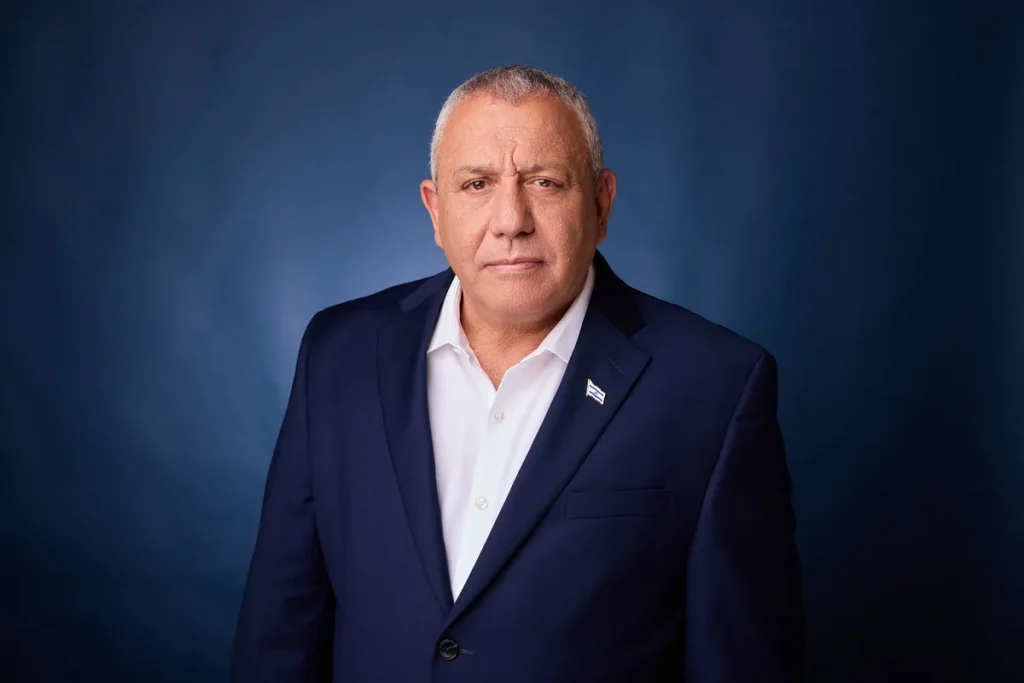
Israel’s President Isaac Herzog formally handed Yashar leader Gadi Eisenkot the mandate to form the country’s next government on Sunday 8 November, Israel time, at a ceremony at the President’s Residence in Jerusalem, The Times of Israel and The Jerusalem Post reported.
“With the mandate entrusted to me here today, I will lead the establishment of a national emergency government,” Eisenkot said at the ceremony, according to The Times of Israel.
By law he has 28 days to form a government, and the president may grant an extension of up to 14 additional days, The Jerusalem Post reported. The Times of Israel put the window at “up to six weeks”.
Herzog told him, according to The Jerusalem Post: “I expect you to do everything in your power to establish a government that will serve the entire people.”
Who Backed Whom
Factions totalling 67 MKs recommended Eisenkot, factions totalling 46 recommended Benjamin Netanyahu, and one faction of seven chose not to recommend anyone, according to a statement from Herzog’s office quoted by ABC News.
The seven-seat faction that sat out was the Haredi United Torah Judaism, a longtime Netanyahu partner, The Jerusalem Post reported.
The Post listed Eisenkot’s backers as Yashar, the Democrats, Naftali Bennett’s B’Yachad, Avigdor Liberman’s Yisrael Beytenu, and both Arab-led lists, Ra’am and the Joint List. The paper noted that the Arab parties’ recommendations do not commit them to joining his coalition. Likud, Otzma Yehudit, the Religious Zionist Party, Zehut and Shas recommended Netanyahu.
The Arithmetic Inside the 67
The Times of Israel reported that Eisenkot’s endorsers split into a Jewish-led bloc of 48 and an Arab-led bloc of 19. Members of the Jewish bloc have said they will not join a government that relies on the Arab factions’ support, and talk has mounted of a minority government or of joining forces with Haredi parties, the paper said.
Liberman has said he would not sit in any government that included the Arab-Israeli parties, ABC News reported. He was due to meet Eisenkot on Monday 9 November, according to The Times of Israel, and he has denied trying to thwart an Eisenkot-led government.
The numbers go back to the vote on Tuesday 27 October. Netanyahu’s bloc won 53 seats, the opposition bloc 48, and Ra’am and the Joint List a record 19 combined, with Likud the largest party on 27 seats, The Jerusalem Post reported. prw’s election preview and final count trace how the blocs arrived here, and earlier coverage sits in the International archive.
An Invitation to Likud
Eisenkot invited Likud and Religious Zionism to join him on four principles, The Times of Israel reported: Israel as a Jewish and democratic state, the values of the Declaration of Independence, mandatory national service for all, and recognising Hamas as a terror group and committing to its destruction. He did not name Netanyahu in the speech.
“If Likud and the Religious Zionist Party members truly believe that this is a time for unity, as they declared before the president, I cannot imagine a reason why they would not join and support a government under my leadership and based on the principles I presented,” Eisenkot said, according to The Jerusalem Post.
The Times of Israel quoted him as saying: “This will require creative and unconventional political acts. Israel does not have the privilege of wasting time or repeating endless rounds of elections. The challenges are too urgent.”
According to the same paper, he also said: “No one will be able to fulfill all the [campaign] promises they made, and all of us will need to compromise.”
Netanyahu’s Response
In a video statement released before Herzog’s announcement, Netanyahu insisted there needed to be a “unity government” with Eisenkot, ABC News reported.
“This is the will of the people, and this is what the moment requires,” Netanyahu said in the video, according to ABC News.
Separately, Shin Bet and police are investigating allegations of foreign funds aimed at Arab turnout, ABC News reported, although the elections chief said the concerns were not serious enough to undermine the election’s integrity.
Twenty-Eight Days and Three Doors
If Eisenkot fails, the president must decide within three days whether to give the task to another MK, The Jerusalem Post reported. A second candidate would get 28 days with no extension.
After that comes a 21-day window in which at least 61 MKs can ask for a named candidate, who would then get 14 days. If all of those attempts fail, the Knesset is dissolved and another election is held.
Eisenkot has rejected the possibility of a repeat election, according to The Times of Israel. On Monday 9 November, the coalition talks were under way.
Sources: The Times of Israel, “Eisenkot tasked with forming government, vows ‘creative and unconventional’ path to ‘emergency’ coalition”, 8 November 2026 (https://www.timesofisrael.com/eisenkot-gets-nod-to-form-government-vows-unconventional-acts-in-time-of-emergency/); The Jerusalem Post, “’Unconventional steps required’: Eisenkot vows to form emergency gov’t as Herzog bestows mandate”, 8 November 2026 (https://www.jpost.com/israel-election-2026/article-914236); ABC News, “Israeli president picks Gadi Eisenkot, Netanyahu rival, to form government”, 8 November 2026 (https://www.abc.net.au/news/2026-11-08/israel-president-prime-minister-government-picked-eisenkot/107360472)
Photo: Yahav Trudler (Yahav Studio), CC BY-SA 3.0, via Wikimedia Commons.
Gadi Eisenkot, the Yashar leader now tasked with forming Israel’s next government, in a studio portrait.